Embarrassment
A self-conscious emotion tied to social discomfort and loss of honor.

Udo Keppler · Public domain
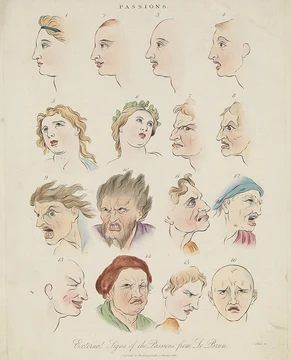
Embarrassment is a self-conscious emotion, often grouped with shame and guilt, that involves discomfort ranging from mild to severe. It typically arises when a person commits—or even imagines committing—a socially unacceptable or frowned-upon act that others witness or learn about. This feeling usually involves a perceived loss of honor, dignity, or other high-value ideals, though the intensity and type vary by situation.
**Causes**
Embarrassment can stem from personal sources, such as unwanted attention to private matters, personal flaws, mishaps, or shyness. Specific actions, like being caught in a lie or making a mistake, are common triggers. In many cultures, being seen nude or inappropriately dressed is especially stressful. Others can also cause personal embarrassment by placing someone in a socially awkward situation—for example, a parent showing baby pictures to friends, a derogatory comment about appearance or behavior, discovering one is the subject of gossip, being rejected, becoming the focus of attention (like at a birthday or wedding), or even witnessing someone else’s embarrassment.
Physical signs often include blushing, sweating, nervousness, stammering, and fidgeting. Some people try to mask embarrassment with smiles or nervous laughter, especially in etiquette situations—a response more common in certain cultures, which can lead to misunderstandings. Feelings of anger may arise if the person believes another is intentionally causing the embarrassment. Responses range from viewing the act as inconsequential or humorous to intense apprehension or fear.
The idea that embarrassment serves an apology or appeasement function originated with Goffman, who argued that the embarrassed person shows they are disturbed by the act and may prove worthy later. Semin and Manstead demonstrated social functions: someone who knocked over a sales display was deemed more likable if they appeared embarrassed rather than unconcerned, regardless of whether they rebuilt the display. The capacity for embarrassment can also be functional for a group or culture. Those less prone to embarrassment are more likely to engage in antisocial behavior—for instance, adolescent boys who showed more embarrassment were less likely to engage in aggressive or delinquent acts. Embarrassment exhibited by aggressive boys was less than one-third of that shown by non-aggressive boys.
- First known written occurrence in Englis
- 1664 by Samuel Pepys
- Derived from French word
- embarrasser (to block or obstruct)
- First recorded French usage
- 1580 by Michel de Montaigne
- Derived from Spanish word
- embarazar (first recorded 1460)
- Spanish word derived from Portuguese
- embaraçar (combination of em- and baraço or baraça, meaning a noose or rope)
Lore & Background
Embarrassment can be personal, caused by unwanted attention to private matters, personal flaws, mishaps, or shyness. Causes include being caught in a lie, making a mistake, being seen nude or inappropriately dressed, or being placed in a socially awkward situation by others. Personal embarrassment is usually accompanied by blushing, sweating, nervousness, stammering, and fidgeting, and may be masked with smiles or nervous laughter. Responses range from perceiving the act as inconsequential to intense apprehension or fear.
Reader's Guide
Embarrassment serves an apology or appeasement function, as demonstrated by Goffman, who argued the embarrassed individual shows they are disturbed by the act and may prove worthy later. Semin and Manstead showed that a perpetrator of a bad act who appeared embarrassed was deemed more likable than one who appeared unconcerned, regardless of restitution. The capacity for embarrassment is functional for groups or cultures; those not prone to embarrassment are more likely to engage in antisocial behavior. For example, adolescent boys who displayed more embarrassment were less likely to engage in aggressive or delinquent behaviors. Professional embarrassment can arise from failed public policy, exposure of corrupt practices, or willful disregard for evidence, and often involves public expressions of anger, denial, or attempts to minimize consequences. Vicarious embarrassment, or second-hand embarrassment, is felt from observing another's embarrassing actions, and is more common in people who rate themselves as more empathic.
Did You Know?
- The first known written occurrence of 'embarrass' in English was in 1664 by Samuel Pepys in his diary.
- The word derives from the French 'embarrasser', meaning 'to block' or 'obstruct', first recorded by Michel de Montaigne in 1580.
- Vicarious embarrassment is more likely to be experienced by people who rate themselves as more empathic.
- Adolescent boys who displayed more embarrassment were found less likely to engage in aggressive or delinquent behaviors.
Defining the Phenomenon and Setting Boundaries
Vicarious embarrassment—sometimes called secondhand embarrassment, empathetic embarrassment, or by the German terms Fremdscham and fremdschämen—describes the peculiar discomfort a person feels when watching someone else stumble into an awkward or humiliating moment. Crucially, the observer is not embarrassed about their own conduct; the sting comes entirely from witnessing another individual's socially inappropriate behavior, whether heard or seen. This sets it apart from ordinary embarrassment, which is always self-referential. The phenomenon also sits in deliberate contrast to schadenfreude, the pleasure one takes in another's misfortune. Where schadenfreude invites a smile, vicarious embarrassment triggers a wince. It further differs from emotional contagion, in which feelings spread between two or more people and are genuinely shared. Vicarious embarrassment requires only that the observer register the emotion; the person in the embarrassing situation may be entirely oblivious to the implications of their actions. Even a solitary viewer, completely isolated from the subject, can experience the full force of the reaction.
The Psychology Behind the Flinch
Two psychological engines drive the experience. The first is empathy, the capacity to understand and feel what another person is going through. Because empathy is widely regarded as a highly reinforcing emotion that encourages selflessness and prosocial conduct, individuals with stronger empathic ability tend to be more susceptible to vicarious embarrassment. The recognition of another's emotional state may even operate below conscious awareness, suggesting an innate wiring for reading social cues. The second mechanism, self-projection, works as a kind of mirror image of the classic psychoanalytic concept of projection. In standard projection, a person denies an uncomfortable feeling in themselves and attributes it to someone else. Self-projection reverses the flow: the undesirable emotion is present in the other person, and the observer projects what they judge to be the appropriate response onto their own body and mind. A person who is prone to lying, for instance, might wince intensely when watching a stranger get caught in a transparent fabrication, because they have mapped that scenario onto their own inner life. Together, empathy and self-projection explain why the same awkward moment can produce wildly different reactions in different observers.
The Body's Response to Another's Humiliation
The physical and emotional signature of vicarious embarrassment mirrors the original feeling of shame, yet its intensity is calibrated by the observer's own relationship with social anxiety. For individuals who regularly struggle with their own embarrassment, the reaction can be remarkably vivid: a flush of blushing, a sheen of excess sweat, visible trembling, a racing heartbeat, and even a wave of nausea. These are the same somatic markers that accompany a person's own humiliating moment, now triggered by watching someone else. For those less prone to social anxiety, the response tends to be milder but still unmistakable—a cringe, a quick look away, a general sense of physical discomfort that makes the observer want to shrink into their seat. What unites every level of intensity is the fact that the observer is the sole carrier of the emotion. The person who tripped, misspoke, or fumbled the handshake may remain perfectly unaware that they have just set off a cascade of sympathetic distress in a stranger across the room. This one-directional quality distinguishes the experience from any form of shared or mutual emotional state.
From Social Glue to Screen Entertainment
Beyond the individual's inner experience, vicarious embarrassment plays a quiet but powerful role in social learning. Embarrassing moments typically arise when someone fails to meet a culturally defined expectation, and the reaction of onlookers serves as a collective signal about what is deemed appropriate. While the direct embarrassment of the victim can isolate them through cultural bias, the observer's vicarious response functions as a prosocial bridge, reinforcing norms between the two parties and encouraging future conformity to social codes. This dynamic has found a particularly fertile home in modern television. As laugh tracks were gradually abandoned in sitcom production, writers and directors discovered that the natural silence following an awkward beat could be just as potent a comedic tool. The result was the rise of cringe comedy, a genre built around dramatic irony, situational awkwardness, and the audience's own secondhand wince. The British series The Office stands as one of the most critically celebrated examples, proving that the collective flinch of a living room full of viewers can be as satisfying as any punchline.
Gallery




Frequently Asked Questions
Who is Embarrassment?
Embarrassment is a self-conscious emotion that produces a spectrum of social discomfort, from mild unease to severe distress. It typically surfaces when a person perceives that they have violated a social norm or lost a measure of personal dignity in front of others.
What are Embarrassment's powers or role?
Embarrassment functions as a social self-corrective, triggering discomfort when someone commits or even merely imagines committing an act others would frown upon. Its intensity scales with the perceived loss of honor or the degree of unwanted attention to one's private flaws.
How does Embarrassment's story end?
An episode of Embarrassment usually resolves once the perceived social threat passes, whether through the observer's forgiveness, the passage of time, or the individual reframing the event. Unlike shame, which can linger indefinitely, Embarrassment tends to fade once the audience's attention shifts elsewhere.
Why is Embarrassment important?
Embarrassment serves as a key social regulator, discouraging behavior that would damage a person's standing within a group. It is closely grouped with shame and guilt but is distinguished by its focus on external perception rather than purely internal moral failure.
What is the etymology of the word 'Embarrassment'?
The English term first appeared in writing in 1664 in Samuel Pepys's diary, borrowed from the French 'embarrasser' (meaning to block or obstruct), which Montaigne used as early as 1580. Tracing further back, the French word descends from the Spanish 'embarazar' (first recorded 1460), which itself came from the Portuguese 'embaraçar,' combining the prefix 'em-' with 'baraço,' meaning a noose or rope.
More in Emotions 1-21
Spotted an error? Know more?
This is a living reference — every entry is fact-audited, and reader corrections feed straight into our audit queue. Suggest an edit · See this site's audit record