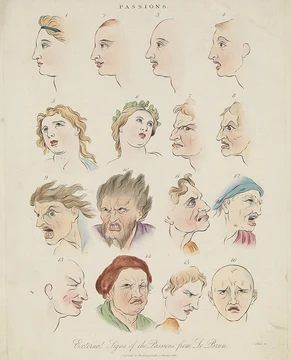
Gratitude
Gratitude is appreciation for kindness, studied across philosophy, religion, and psychology.

DeFacto · CC BY-SA 4.0
Gratitude, thankfulness, or gratefulness is a feeling of appreciation or positive response by a recipient of another's kindness, such as gifts, help, favors, or other generosity. The word derives from the Latin 'gratus,' meaning 'pleasing' or 'thankful.' Its absence where expected is termed ingratitude or ungratefulness. Gratitude has been a subject of interest in ancient, medieval, and modern philosophy, as well as in several world religions and the discipline of psychology, which studies its short-term experience, individual differences, and therapeutic benefits.
- field
- Philosophy, Religion, Psychology
- known_for
- Feeling of appreciation for kindness; topic in normative ethics, applied ethics, political philosophy, and moral psychology; central to Jewish, Christian, Islamic, Buddhist, Muslim, Baháʼí, and Hindu
Lore & Background
Philosophical approaches to gratitude include the view of A. D. M. Walker, who argues that gratitude is appropriate even toward unintentional kindness, such as an offhand remark from a stranger. Walker also notes that Thomas Aquinas commended gratefulness for benefits received even when given with contempt, reluctance, or regret. Gratitude is a topic in normative ethics, applied ethics, political philosophy, and moral psychology.
In religious contexts, gratitude is prized in Christian, Buddhist, Muslim, Jewish, Baháʼí, and Hindu traditions. Judaism emphasizes gratitude as essential to worship, with Hebrew Scriptures and prayers like the Shema, Amidah (including the blessing Modim), and Alenu incorporating it. Christianity, as noted by Martin Luther, considers gratitude 'the basic Christian attitude,' and the Eucharist derives from the Greek word for thanksgiving. Islam encourages gratitude through the Quran, the term 'Alhamdulillah,' and practices such as daily prayer and fasting during Ramadan.
Psychology measures individual differences in gratitude using scales like the GQ6, Appreciation Scale, and GRAT. Research shows gratitude contributes to positive emotions, reduces negative emotions, and is associated with higher subjective well-being, happiness, lower depression and stress, better sleep, and stronger social relationships.
Reader's Guide
Gratitude holds significance as a cross-cultural and interdisciplinary concept, appearing in philosophical debates about reciprocity and intentionality, religious worship and ethics, and psychological studies of well-being. Philosophers like A. D. M. Walker and Thomas Aquinas have explored its scope, including gratitude for unintentional or reluctant kindness. Religions worldwide—including Judaism, Christianity, and Islam—integrate gratitude into core prayers, texts, and practices, viewing it as a fundamental response to divine generosity. Psychological research has developed scales to measure gratitude as both a state and a trait, linking it to improved mental health, coping strategies, and relationship satisfaction. The concept's legacy lies in its universal recognition as a positive emotion that shapes individual behavior, social bonds, and spiritual life, though its precise definition and boundaries remain subjects of ongoing inquiry across disciplines.
Did You Know?
- The word gratitude comes from the Latin 'gratus,' meaning 'pleasing' or 'thankful.'
- A. D. M. Walker argues gratitude is appropriate even toward unintentional kindness, such as an offhand remark from a stranger.
- Martin Luther referred to gratitude as 'the basic Christian attitude.'
- The term 'Kafir' in the Quran means 'ungrateful' toward God in its most fundamental sense.
Philosophical Foundations and Ethical Dimensions
Gratitude has long occupied a central place in philosophical inquiry, spanning normative ethics, applied ethics, political philosophy, and moral psychology. Thinkers from the ancient and medieval periods through the modern era have wrestled with what gratitude actually is and when it is owed. A notable intervention comes from A. D. M. Walker, who challenged the narrow view that gratitude is merely a form of reciprocity. Walker argued that a person can rightly feel grateful even for an unintentional kindness, such as a casual, offhand remark from a stranger. He also drew on Thomas Aquinas, who praised gratefulness toward benefits received even when the benefactor acted out of contempt, reluctance, or regret. This broadens gratitude well beyond a simple transactional exchange, positioning it as a response to goodness itself rather than to the intention behind it. The term's roots in the Latin gratus, meaning "pleasing" or "thankful," echo this idea of a positive orientation toward what is received. The opposite, ingratitude, marks a failure to acknowledge that goodness, and philosophers have long treated this failure as a moral deficiency in its own right.
A Universal Religious Sentiment
Gratitude stands as one of the most widely shared emotional commitments across the world's major faith traditions. It is explicitly prized in Christianity, Buddhism, Islam, Judaism, the Bahá'í Faith, and Hinduism, and the concept threads through sacred texts, liturgical practices, and everyday devotional life in each. In Christianity, Martin Luther called gratitude "the basic Christian attitude," and the tradition continues to describe it as the heart of the gospel. Jonathan Edwards, writing in the eighteenth century, identified gratitude as among the most reliable markers of genuine religious feeling, and Pope Francis has echoed this by noting that families teach children to say "thank you" as an authentic expression of appreciation for what they have been given. Perhaps the most striking linguistic evidence of gratitude's centrality is the Eucharist, the principal rite in Orthodox, Catholic, Lutheran, and Anglican worship, whose very name derives from the Greek word for thanksgiving. Research also suggests that regular participation in religious services and spiritual activities tends to strengthen a person's overall capacity for gratitude across every domain of life, even though spirituality and gratitude are not strictly dependent on one another.
Gratitude in Jewish and Islamic Practice
In Judaism, gratitude is woven into the very fabric of worship and daily existence. The Hebrew worldview holds that all things originate from God, making thankfulness an essential response rather than an optional sentiment. The Psalms are saturated with expressions of perpetual thanks, and the Shema, the foundational declaration of faith, frames the commandment to love God as an act of gratitude. Within the Amidah, the central prayer recited three times daily, the blessing called Modim, meaning "We give thanks to You," holds a unique position: it is the only blessing spoken jointly by the congregation and the prayer leader. The concluding prayer, the Alenu, likewise gives thanks for the particular destiny of the Jewish people, and devout worshippers utter more than a hundred blessings, or berachot, throughout a single day. Islam places equally strong emphasis on gratitude toward Allah. The Quran repeatedly urges believers to express thanks in every circumstance, and the phrase "Alhamdulillah," meaning praise be to God, is counted among the four beloved words of Allah. The term Kafir, in its most fundamental Quranic sense, carries the meaning of ungratefulness toward God, and Islamic teaching holds that those who are grateful will be granted even more.
The Psychology and Science of Gratitude
Modern psychology has developed a sophisticated framework for studying gratitude, distinguishing between what researchers call state gratitude, the short-term experience of feeling thankful after receiving a gift, help, favor, or other act of generosity, and trait gratitude, which captures individual differences in how frequently a person tends to feel appreciative over time. Scientists are also investigating the relationship between these two forms and exploring the therapeutic benefits that gratitude may confer on well-being. The word itself traces back to the Latin gratus, carrying connotations of being pleasing or thankful, and its absence, ingratitude or ungratefulness, is treated as a distinct psychological and social phenomenon. Research connecting gratitude to spirituality has found that while the two are not strictly interdependent, spiritual engagement can enhance a person's capacity for gratitude. Individuals who regularly attend religious services or participate in faith-based activities tend to report a stronger sense of thankfulness across all areas of their lives. In small studies of Catholic nuns and priests, when asked to identify emotions directed toward God from a list of fifty, love and gratitude emerged as the two most frequently experienced, underscoring that gratitude is not merely a passing sentiment but a sustained, central affective orientation.
Gallery





Frequently Asked Questions
Who is Gratitude?
Gratitude is the warm, appreciative response a person feels when receiving kindness—whether that's a gift, a favor, or someone's generosity. It sits at the intersection of philosophy, religion, and psychology as one of the most studied emotional experiences.
What are Gratitude's powers or role?
Gratitude functions as a positive emotional signal that reinforces social bonds and acknowledges another person's goodwill. In therapeutic contexts, it is recognized for its short-term mood-boosting effects and its role in moral reasoning.
How does Gratitude's story end?
Gratitude doesn't have a fixed ending, but its absence—called ingratitude—marks a social and moral failure where appreciation was expected. In practice, the arc of gratitude often loops back, as feeling thankful can prompt further acts of generosity toward others.
Why is Gratitude important?
Gratitude is a core value woven through Judaism, Christianity, Islam, Buddhism, Hinduism, and the Baháʼí Faith, making it one of the most universally recognized moral emotions. Philosophers also treat it as a key topic in normative ethics, applied ethics, and moral psychology.
What is Gratitude's origin?
The word traces back to the Latin term 'gratus,' which simply meant 'pleasing' or 'thankful.' This etymology reflects the emotion's ancient roots as a response to something that brings satisfaction or delight.
More in Emotions 1-21
Spotted an error? Know more?
This is a living reference — every entry is fact-audited, and reader corrections feed straight into our audit queue. Suggest an edit · See this site's audit record