Emotion
Emotions are complex states with no single agreed definition.

Wikimedia Commons · CC BY 4.0
Emotion refers to physical and mental states brought on by neurophysiological and neuropsychological changes, associated with subjective experiences such as thoughts, feelings, behavioral responses, and a degree of pleasure or displeasure. There is no scientific consensus on a definition, and emotions are often intertwined with mood, temperament, personality, disposition, or creativity.
- first_coined
- 14th century in French
- english_adaptation
- 1601
- modern_concept_emerged
- Early 19th century, notably in Thomas Brown's 1820 lectures
Lore & Background
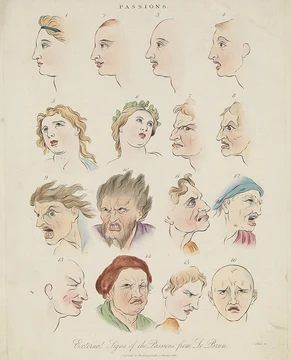
The word emotion traces back to the 14th-century French 'émotion', not to Étienne Dolet. It entered English in 1601. In the early 1800s, Thomas Brown's lectures (published 1820) helped shape emotion as a theoretical term for mental experience, with the modern concept developing earlier than the 1830s. Before that, people spoke of 'passions', 'accidents of the soul', or 'moral sentiments'.
Reader's Guide
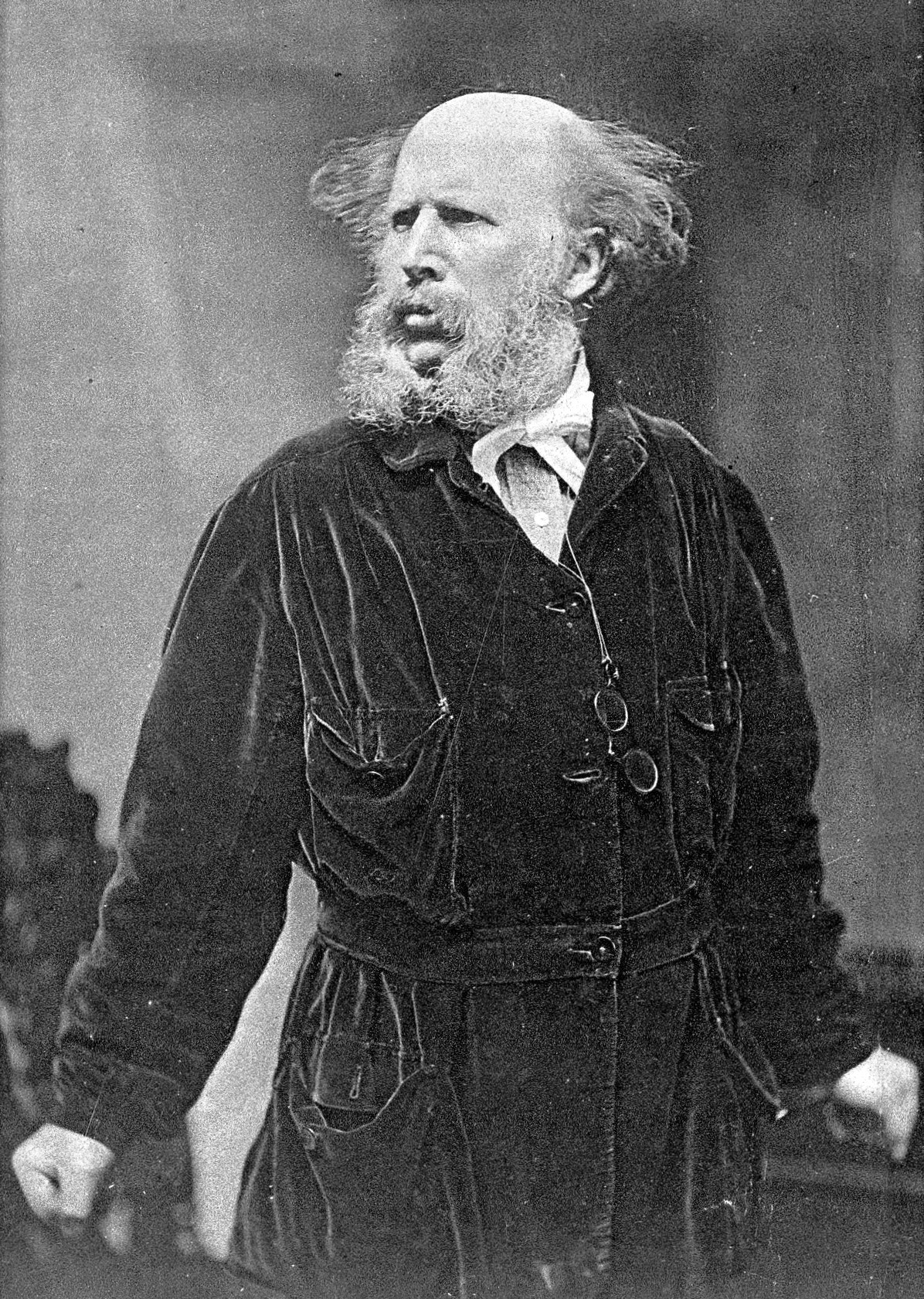
Emotion has been a subject of intense research across many fields, including psychology, medicine, history, sociology, computer science, and philosophy. Theorizing about its evolutionary origin dates back to Charles Darwin. Current research uses tools like positron emission tomography and functional magnetic resonance imaging to study affective processes in the brain. From a mechanistic perspective, emotion is defined as a positive or negative experience associated with a particular pattern of physiological activity. Academics have attempted to identify emotion with single components—William James with subjective experience, behaviorists with instrumental behavior, psychophysiologists with physiological changes—but more recently emotion is said to consist of all components. The different components are categorized somewhat differently by discipline. In psychology and philosophy, emotion includes subjective conscious experience characterized by psychophysiological expressions, biological reactions, and mental states. Sociology, as described by Peggy Thoits, includes physiological components, cultural labels, expressive body actions, and appraisal of situations. Cognitive processes like reasoning are often regarded as separate from emotional processes, though not all theories accept this separation. Most clinical research now focuses on emotion dynamics in daily life, including intensity, variability, instability, inertia, and differentiation of emotions.
Did You Know?
- The earliest known use of the French word 'émotion' dates to the 14th century.
- There is no scientific consensus on a definition of emotion.
- The modern concept of emotion was developing by the early 19th century, with Thomas Brown's 1820 lectures playing a key role.
- Some cross-cultural studies indicate that the categorization of 'emotion' and basic emotions like 'anger' and 'sadness' are not universal.
Discrete Emotion Theory and the Six Basic Emotions
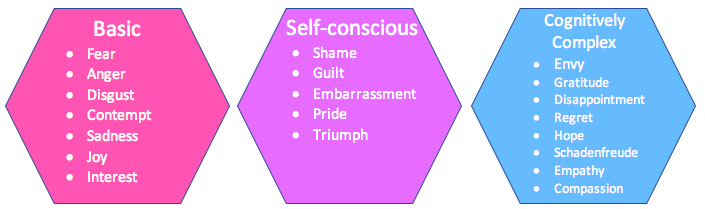
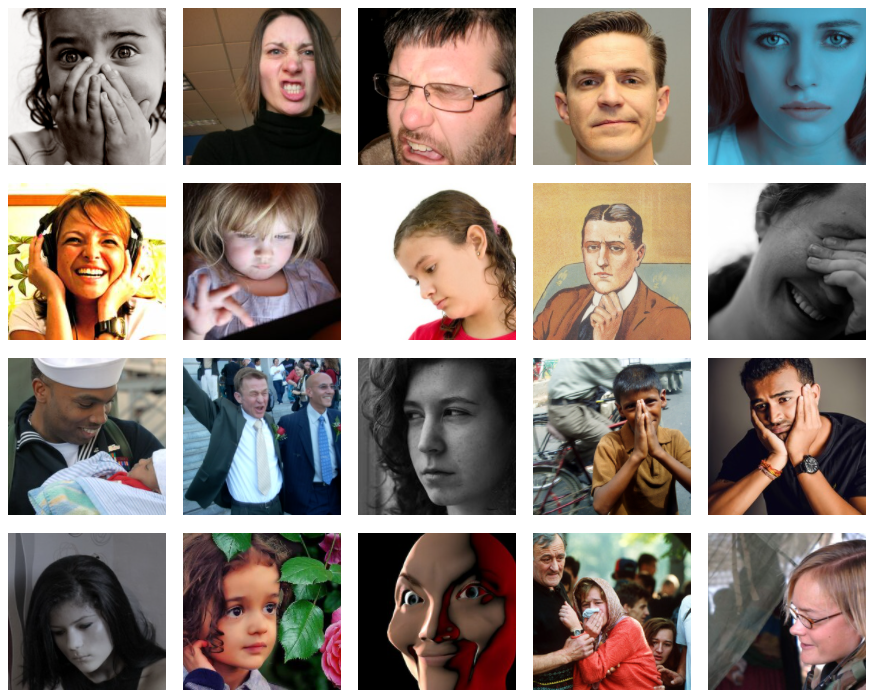
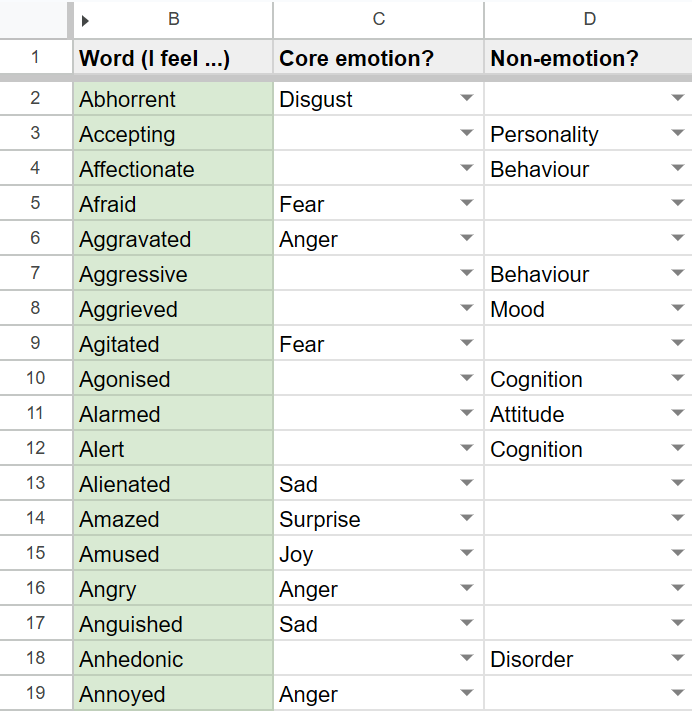
Discrete emotion theory proposes that every human being is born with a fixed repertoire of fundamental emotions that can be identified across all cultures. These emotions are termed 'discrete' because they are thought to be separable—distinguishable through specific facial expressions and biological processes that accompany each one. A landmark moment in this line of inquiry came in 1992, when Paul Ekman and his research team conducted a cross-cultural investigation and identified six core emotions: anger, disgust, fear, happiness, sadness, and surprise. According to this framework, each emotion carries its own set of characteristics that allow it to be communicated non-verbally to varying degrees of intensity. Rather than representing a fleeting, individual emotional state, each of these categories functions as a stable, recognizable unit. The underlying assumption is that the brain's appraisal of a stimulus—relative to a person's goals or survival needs—triggers a specific, biologically distinct response. Proponents argue that one should be able to identify another person's emotion purely from their brain activity or physiology, without needing to know what they are seeing or the broader context of the situation.
The Constructionist Challenge to Basic Emotions
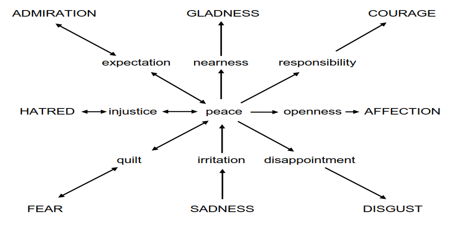
Against the backdrop of discrete emotion theory, a competing school of thought—often called the constructionist approach—offers a fundamentally different picture. Rather than treating emotions as pre-packaged biological modules, constructionist accounts hold that what a person experiences as a specific emotion is assembled in the moment from more basic ingredients. Two key components are proposed: core affect, which encompasses hedonic valence and physiological arousal, and conceptual knowledge, such as the semantic meaning attached to emotion labels like 'anger' or 'joy.' A defining feature of this perspective is the claim that different emotions do not occupy specific, dedicated regions of the nervous system, nor do they produce unique physiological signatures. Context takes center stage: the particular situation shapes which concepts become accessible, and therefore which emotion emerges. This stands in sharp contrast to the basic-emotion view, where the function, expression, and meaning of each emotion are hypothesized to be biologically distinct and readable from neural or physiological data alone. The debate between these two camps remains one of the most contested issues in affective science and emotion research.
From Descartes to Modern Dimensional Frameworks
Long before modern neuroscience entered the picture, philosophers and early psychologists were already grappling with how to organize the vast landscape of human feeling. In 1649, René Descartes devoted his philosophical treatise The Passions of the Soul to defining and examining six primary passions: wonder, love, hate, desire, joy, and sadness. More than two centuries later, in 1897, Wilhelm Max Wundt—widely regarded as the father of modern psychology—proposed that emotions could be mapped along three dimensions: pleasurable versus unpleasurable, arousing or subduing, and strain or relaxation. Harold Schlosberg refined this approach in 1954, naming his three axes pleasantness–unpleasantness, attention–rejection, and level of activation. The broader dimensional framework that emerged from these efforts suggests that a single, interconnected neurophysiological system underlies all affective states, a proposal that directly challenges the discrete-emotion view, which locates different emotions in separate neural circuits. While numerous dimensional models have been proposed over the decades, only a handful have endured as the dominant frameworks accepted by the majority of researchers today.
Three Dominant Two-Dimensional Models in Practice
Three two-dimensional models have risen to prominence in contemporary emotion research, each offering a distinct geometric metaphor for mapping affective experience. James Russell's circumplex model arranges emotions in a circular space defined by arousal on the vertical axis and valence on the horizontal axis, with the center representing neutral valence and medium arousal. Emotional states can occupy any point in this space, and the model has been widely applied to testing emotion words, facial expressions, and affective states. Russell and Lisa Feldman Barrett further describe a modified version as capturing core affect—the most elementary feelings not necessarily directed at any object. The vector model, introduced in 1992, uses a boomerang-shaped arrangement of two directional vectors, assuming that arousal is always present while valence determines which vector an emotion falls along; it has been most commonly applied to word and picture stimuli. The PANA model, created by Watson and Tellegen in 1985, takes a different tack by treating positive affect and negative affect as two entirely separate systems rather than points on a shared continuum.
Gallery

Frequently Asked Questions
What is Emotion?
Emotion describes a blend of bodily and psychological shifts that produce a personal experience involving thoughts, feelings, and a drive to act, along with a sense of whether the state feels positive or negative. No single definition has been universally accepted across disciplines.
Where does the word 'Emotion' come from?
The term originated in French during the 14th century and was adapted into English around 1601. It did not become a formally recognized psychological concept until the early 1800s.
What are the key components of Emotion?
At its core, Emotion involves neurophysiological and neuropsychological changes that give rise to subjective thoughts, feelings, and behavioral urges. It also carries a valence—a degree of pleasure or displeasure—tied to the experience.
How is Emotion distinct from mood or personality?
While Emotion is often discussed alongside mood, temperament, and disposition, it is generally understood as a more acute, event-driven state rather than a long-lasting trait. The boundaries between these related concepts remain debated and overlapping.
When did Emotion become a recognized field of study?
The modern conceptualization of Emotion took shape in the early 19th century, with Thomas Brown's 1820 lectures marking a notable milestone in formalizing the idea. Prior to that, the concept existed in language but lacked a structured academic framework.
More in Emotions 1-21
Spotted an error? Know more?
This is a living reference — every entry is fact-audited, and reader corrections feed straight into our audit queue. Suggest an edit · See this site's audit record