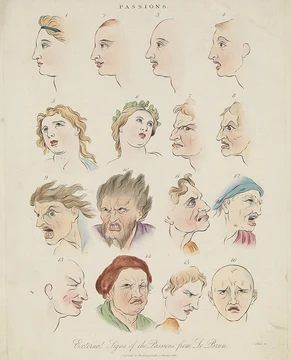
Guilt (emotion)
A moral emotion prompting reparatory behavior and relationship restoration.

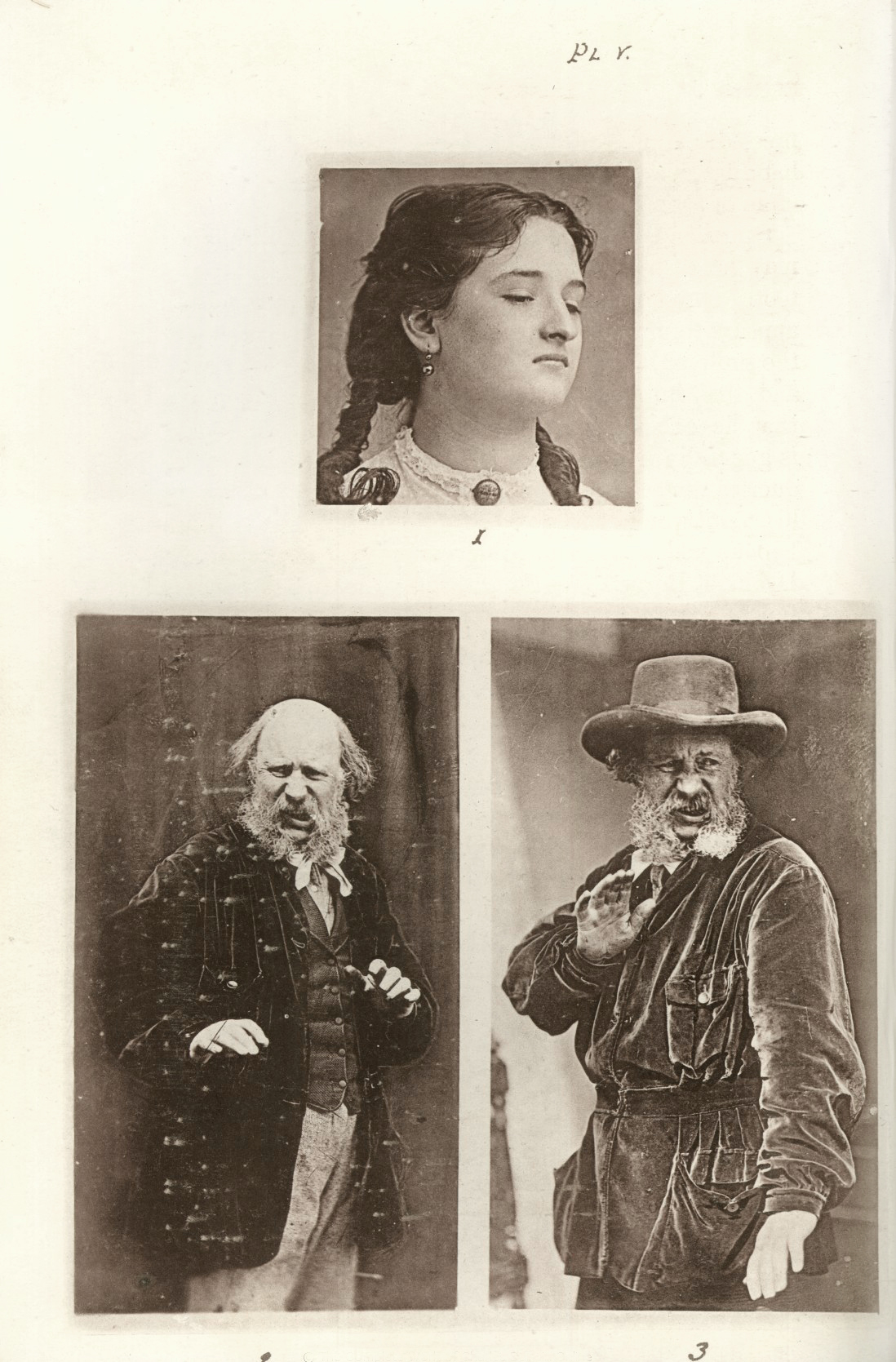
1 by Oscar Gustave Rejlander , rest unsure · Public domain
Guilt is a moral emotion that arises when someone believes—whether correctly or not—that they have fallen short of their own ethical standards or broken universal moral rules, and that they are largely to blame for that breach. While the experience of guilt is unpleasant, it can lead to positive, pro-social actions aimed at repairing relationships and making amends. As a cluster of basic emotions, guilt includes self-directed anger, sadness for the person harmed, anxiety, and fear—such as the fear of damaging or losing ties with others or with society. It is closely linked to remorse, regret, and shame. Guilt also plays a key role in maintaining symptoms of obsessive-compulsive disorder.
In psychology and psychiatry, guilt is understood as an affective state marked by inner conflict over having done something one believes one should not have done—or not having done something one believes one should have done. This feeling tends to persist, driven by the conscience, which Sigmund Freud called the superego. Freud rejected the idea of divine influence, instead tracing guilt to a childhood fear of losing love and relationships, especially the fear that parents might reject the child. The child internalizes this fear, turning it into self-directed anger. For Jacques Lacan, guilt was an unavoidable companion for any person who acknowledged normality within the Symbolic order. Alice Miller observed that many people carry a lifelong oppressive guilt from feeling they have not met their parents’ expectations, and that no argument can overcome these feelings because they originate in early life. Les Parrott linked this to “false guilt,” where the mere feeling of guilt is taken as proof of wrongdoing. Therapists have also identified survivor’s guilt in people who lived through traumatic events in which a loved one died. Philosopher Martin Buber distinguished Freud’s guilt, based on internal conflicts, from existential guilt, which stems from actual harm done to others. Guilt is often tied to anxiety. In mania, Otto Fenichel noted, patients use denial by overcompensation to act as if they have no guilt feelings. Researchers measure guilt using questionnaires like the Differential Emotions Scale or the Dutch Guilt Measurement Instrument.
According to psychoanalytic theory, defenses against guilt can become a dominant part of personality. People use various methods to a
- field
- Psychology and psychiatry
- associated_concepts
- Remorse, regret, shame, obsessive–compulsive disorder
- key_theorists
- Sigmund Freud, Jacques Lacan, Alice Miller, Martin Buber, Otto Fenichel
- measurement_tools
- Differential Emotions Scale (Izard's DES), Dutch Guilt Measurement Instrument
- related_phenomena
- Survivor's guilt, false guilt, guilt proneness
Lore & Background
Guilt is composed of self-directed anger, sadness for the victim, anxiety, and fear of damaging or losing relationships. Sigmund Freud rejected the role of God and attributed guilt to the individual's fear of loss of love, beginning in childhood with fear of parental rejection, which the child turns inward to create self-directed anger. Jacques Lacan viewed guilt as the inevitable companion of the signifying subject who acknowledged normality in the form of the Symbolic order. Alice Miller claimed many people suffer lifelong from oppressive guilt feelings rooted in not living up to parents' expectations, a condition Les Parrott called 'the disease of false guilt.'
Reader's Guide
Guilt is significant in psychology and psychiatry as both a source of distress and a motivator for pro-social behavior. It can prompt reparatory actions to restore relationships and is linked to trustworthiness and moral character. Defenses against guilt, such as repression, projection, and self-harm, can become overriding aspects of personality. In psychopathy, individuals lack true guilt or remorse, rationalizing harm to others, though research suggests they can willfully empathize under certain conditions. Guilt also plays a role in obsessive–compulsive disorder symptoms and survivor's guilt. Evolutionary theories propose guilt helped maintain reciprocal altruism. The concept remains debated, with distinctions between Freudian internal conflict-based guilt and existential guilt based on actual harm to others.
Did You Know?
- Guilt is composed of self-directed anger, sadness for the victim, anxiety, and fear of damaging or losing relationships.
- Sigmund Freud rejected the role of God and blamed guilt on the individual's fear of loss of love, beginning in childhood.
- People with psychopathy lack any true sense of guilt or remorse for harm they may have caused others.
- Guilt proneness is a personality trait that is a reliable predictor of trustworthiness and moral character.
The Discrete Emotion Question
Whether an emotion like guilt belongs to a fixed, innate set of feelings has long divided researchers in affective science. The discrete emotion framework holds that all humans share a universal collection of basic emotions, identifiable through facial expression and biological processes without needing to know the surrounding context. Paul Ekman and his team, in a widely cited 1992 cross-cultural investigation, settled on six such emotions—anger, disgust, fear, happiness, sadness, and surprise—each carrying its own non-verbal signature. Under this view, an emotion is triggered when the brain appraises a stimulus against the perceiver's goals or survival needs, and each category should leave a distinct functional mark on brain activity or physiology. Notably, guilt does not appear among Ekman's six, placing it outside the narrow circle of what discrete theorists consider biologically hardwired. This absence has fueled ongoing debate about whether emotions are truly separable categories or something more fluid and context-dependent.
The Constructionist Counterargument
A rival school of thought, often called constructionism, challenges the very premise that emotions like guilt are pre-packaged biological modules. According to constructionist accounts, what a person experiences as a specific emotion is assembled in the moment from more primitive ingredients: core affect, a blend of hedonic valence and physiological arousal, and conceptual knowledge, including the semantic meaning of emotion words themselves. In this picture, no single emotion occupies a dedicated neural address or produces a unique physiological fingerprint. Instead, context plays a decisive role because it determines which concepts are accessible to the mind at that moment. The apparent ease with which people recognize emotions in themselves and others has historically supported the discrete view, yet constructionists argue this recognition is a post-hoc labeling process rather than evidence of innate categories. For an emotion as socially and morally loaded as guilt, this distinction matters enormously: it may be less a fixed signal and more a narrative the brain constructs from raw affective material and culturally available concepts.
From Descartes to Dimensional Thinking
Long before modern neuroscience entered the picture, philosophers and early psychologists were already trying to map the emotional landscape along measurable axes. In 1649, René Descartes laid out six primary passions—wonder, love, hate, desire, joy, and sadness—in his treatise The Passions of the Soul. Nearly two and a half centuries later, Wilhelm Wundt, widely regarded as the father of experimental psychology, proposed in 1897 that any emotion could be located along three continua: pleasurable versus unpleasurable, arousing versus subduing, and strain versus relaxation. Harold Schlosberg refined this approach in 1954 with his own triad of pleasantness–unpleasantness, attention–rejection, and level of activation. What unites these dimensional frameworks is the assumption that a single, interconnected neurophysiological system underlies all affective states, standing in direct contrast to discrete-emotion theories that assign each feeling its own separate neural circuitry. For an emotion like guilt, dimensional models offer a way to describe its position relative to pleasure and arousal without needing to prove it is a biologically isolated category.
Mapping Emotions in Two Dimensions
Several two-dimensional frameworks have become the workhorses of contemporary affective research. James Russell's circumplex model arranges emotions in a circular space where the vertical axis captures arousal and the horizontal axis captures valence; the center of the circle marks neutral valence paired with moderate arousal. Russell and Lisa Feldman Barrett have described their modified version as representing core affect, the most elementary undirected feelings, onto which specific emotional episodes can be plotted. The vector model, introduced in 1992, takes a different geometric approach: two vectors form a boomerang shape, with an ever-present arousal dimension and valence determining whether an emotion sits on the upper or lower vector. High-arousal states are separated by valence, while low-arousal states cluster near the vectors' meeting point. Meanwhile, the Positive Activation–Negative Activation model, first proposed by Watson and Tellegen in 1985, treats positive and negative affect as two independent systems rather than opposite ends of a single scale. Together, these models give researchers flexible tools for locating an emotion like guilt within a continuous affective space.
Gallery

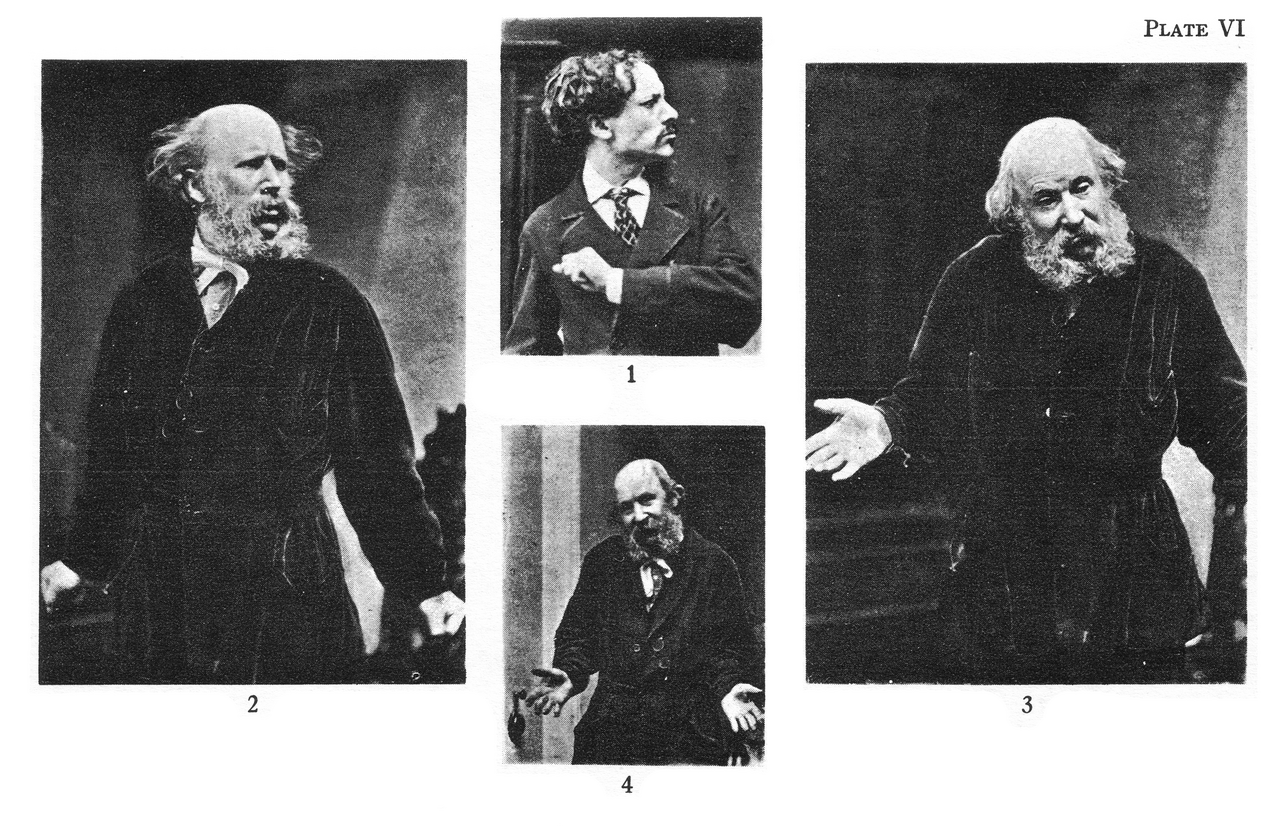
Frequently Asked Questions
Who is Guilt (emotion)?
Guilt is a moral emotion that activates when a person feels they have violated their own ethical code or a broader moral rule and takes personal responsibility for that breach. It bundles together self-directed anger, sadness for the person hurt, anxiety, and fear of losing important social bonds.
What are Guilt (emotion)'s powers/role?
Its core function is to motivate reparatory action—making amends, repairing a damaged relationship, or restoring social ties. Rather than being purely destructive, it channels emotional energy toward pro-social behavior that mends what was broken.
How does Guilt (emotion)'s story end?
In a healthy arc, guilt resolves once the person takes concrete steps to repair the harm and restore the relationship. However, when it becomes rigid or unfounded—manifesting as false guilt, chronic guilt proneness, or looping patterns seen in obsessive-compulsive disorder—it can persist without ever reaching that restorative resolution.
Why is Guilt (emotion) important?
It serves as a key moral regulator in human societies, pushing individuals to consider others' wellbeing and maintain ethical conduct. Major theorists from Freud and Lacan to Alice Miller and Martin Buber have built significant frameworks around how guilt shapes personality and social bonding.
How is Guilt (emotion) different from Shame?
While both are self-conscious moral emotions, guilt centers on a specific action or omission the person feels responsible for, whereas shame targets the self as a whole. Guilt tends to point outward toward the harmed other and toward repair, making it more likely to produce constructive follow-through.
More in Emotions 1-21
Spotted an error? Know more?
This is a living reference — every entry is fact-audited, and reader corrections feed straight into our audit queue. Suggest an edit · See this site's audit record