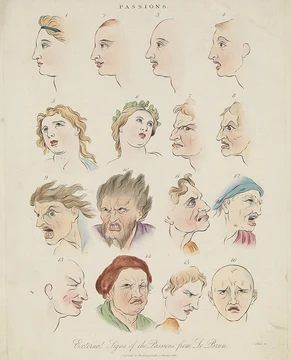
Joy
Joy is a distinct state of intense, long-lasting contentment.

Joy is a state of being in which a person feels deep, lasting happiness and contentment with life. It often arises from well-being, success, or good fortune, and while it is closely related to happiness, pleasure, and gratitude, it is not the same as any of them.
C. S. Lewis distinguished joy from pleasure and happiness by noting that pleasures may serve as substitutes for joy, and that joy—unlike happiness or pleasure—has only one trait in common with them: anyone who has experienced it will want it again. He argued that someone who has tasted joy would not trade it for all the world’s pleasures, yet joy is never within our control, whereas pleasure often is. Michela Summa adds that joy accompanies a process from start to finish, while happiness is tied more to the moment of achievement. Joy is a direct emotional response to an event embedded in one’s life concerns and is bound to the present moment, whereas happiness requires an evaluative view of a period or one’s life as a whole.
The sources of joy have been attributed to various factors. Ingrid Fetell Lee, author of *Joyful* and a TED speaker, describes joy as elusive and mysterious, coming from within and found everywhere. She connects joy to the fundamental instinct for survival, noting that each moment of joy is small but accumulates over time. Joy is most commonly found through engagement, self-connection, and living in the moment.
In affect theory, joy is one of the less-studied emotions. Susanna Paasonen suggests that excitement and joy shape personality by building on past joys, forming a web of interests. She studies this in relation to social media, where the fleeting nature of excitement makes it hard to quantify algorithmically. Sara Ahmed, in her work “Happy Objects,” explores how objects can spark joy and happiness. She coined the term “stickiness” to describe emotions like happiness and joy as active forces. Ahmed states that happiness puts us into intimate contact with things; we can be positively affected by something in the present moment, even if that thing is not consciously recognized as an object.
Joy improves health and well-being, bringing psychological changes that enhance mood. Some people have a natural capacity for joy, experiencing it more easily than others. Although there is no conclusive evidence for the genetics of happiness, joy is known to be hereditary. Healthy hab
- definition
- State of being allowing intense, long-lasting happiness and contentment
- related_to
- Well-being, success, good fortune
- distinct_from
- Happiness, pleasure, gratitude
- key_theorists
- C. S. Lewis, Michela Summa, Ingrid Fetell Lee, Susanna Paasonen, Sara Ahmed
- health_effects
- Improves health and well-being; brings psychological changes that improve mood
Lore & Background
C. S. Lewis sharply distinguished joy from pleasure and happiness, calling joy a technical term that must be sharply distinguished from both. He noted that joy has one characteristic in common with them: anyone who has experienced it will want it again. Lewis doubted whether anyone who has tasted joy would exchange it for all the pleasures in the world, but observed that joy is never in our power while pleasure often is.
Michela Summa distinguishes joy from happiness by stating that joy accompanies the process through and through, whereas happiness is more strictly tied to the moment of achievement. Joy is a direct emotional response to an event embedded in life-concerns and is tightly bound to the present moment, while happiness presupposes an evaluative stance concerning one period of one's life or one's life as a whole.
Ingrid Fetell Lee has studied the sources of joy, writing the book Joyful and giving a TED talk. She presents the idea that joy is found in many places, is elusive and mysterious, comes from within, and is connected to our fundamental instinct of survival. She states that each moment of joy is small, but over time they add up to the sum of their parts. Joy is most commonly found through engagement, self-connection, and living in the moment.
Reader's Guide
Joy is one of the less-studied emotions in affect theory. Susanna Paasonen discusses how excitement and joy shape a personality, building in past joys and creating connections that grow into a larger web of interests. She studies this in relation to social media and the difficulty of quantifying fleeting excitement algorithmically. Sara Ahmed explores how objects can spark joy and happiness, coining the term 'stickiness' to describe emotions like happiness and joy as emotions that are doing. Ahmed states that happiness puts us into intimate contact with things, and we can be happily affected in the present of an encounter even if that something does not present itself as an object of consciousness. Joy improves health and well-being, bringing psychological changes that improve mood. Some people have a natural capacity for joy, meaning they experience it more easily. While there is no conclusive evidence for the genetics of happiness, joy is known to be hereditary. Experience of joy is increased through healthy habits such as sharing food, physical activity, writing, and self-connection.
Did You Know?
- C. S. Lewis called joy a technical term that must be sharply distinguished from both happiness and pleasure.
- Michela Summa states that joy accompanies a process through and through, while happiness is tied to the moment of achievement.
- Ingrid Fetell Lee wrote the book Joyful and gave a TED talk titled 'Where joy hides and how to find it.'
- Sara Ahmed coined the term 'stickiness' to describe emotions like happiness and joy as emotions that are doing.
Frequently Asked Questions
What is Joy?
Joy is a deep, sustained emotional state in which a person feels profound contentment and happiness with their life. Unlike a passing mood, it lingers and carries a quality of lasting well-being that sets it apart from momentary feelings.
How is Joy different from happiness or pleasure?
Happiness and pleasure tend to be situational and short-lived, whereas Joy is a deeper, more enduring sense of contentment. C. S. Lewis emphasized that Joy is so distinct that anyone who has truly tasted it would never willingly trade it away for all the pleasures in the world.
Who are the key theorists behind Joy?
Thinkers who have shaped our understanding of Joy include C. S. Lewis, Michela Summa, Ingrid Fetell Lee, Susanna Paasonen, and Sara Ahmed. Each has contributed to drawing clear boundaries between Joy and closely related but separate emotional experiences.
What effects does Joy have on a person?
Joy is associated with improvements in both physical health and overall well-being. It also triggers psychological shifts that lift mood and create a more positive internal state that can persist beyond the initial trigger.
What typically causes Joy to arise?
Joy most often emerges from a sense of well-being, personal success, or experiencing good fortune. Rather than being triggered by a single external event, it tends to grow out of a deeper alignment with one's life and circumstances.
More in Emotions 1-21
Spotted an error? Know more?
This is a living reference — every entry is fact-audited, and reader corrections feed straight into our audit queue. Suggest an edit · See this site's audit record