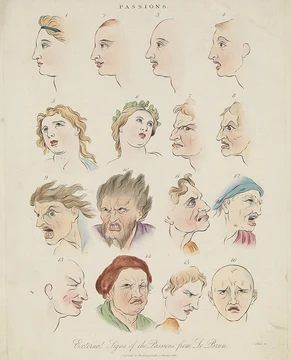
Lust
Lust is intense desire improperly ordered against natural law.

Lust is an intense desire for something, which can take forms such as sexual activity, money, power, food, or even a particular smell. Religions often distinguish lust from passion, categorizing lust as an immoral desire because its object or action is improperly ordered according to natural law, or because the appetite governs the person's will and intellect rather than the reverse.
- field
- Theology, Ethics
- known_for
- Being one of the seven capital sins in Christian tradition, and a concept distinguished from passion in religious moral frameworks
Lore & Background
In Judaism, all evil inclinations and lusts of the flesh are characterized by Yetzer hara, the evil inclination. Yetzer hara is not a demonic force but man's misuse of physical needs, often contrasted with yetzer hatov, the positive desire. The Torah is considered the great antidote against this force, though Yetzer hara can be manipulated into doing good, as without it man would never marry, beget a child, build a house, or occupy himself in a trade.
Reader's Guide
In Christianity, the New Testament uses the Greek word ἐπιθυμέω for lust, which is a general term for desire, not exclusively sexual. In Catholicism, lust is considered a disordered desire for sexual pleasure sought for itself, isolated from procreative and unitive purposes. St. Thomas Aquinas differentiated sins of lust by magnitude, with bestiality as the most grievous, followed by sodomy, unnatural acts, incest, adultery, and seduction. The Latin term luxuria was used by St. Jerome to translate various biblical sins, and Gregory the Great placed it as one of the seven capital sins, often considered the least serious. In Romanesque art, Luxuria is generally feminine, represented by a siren or naked woman with breasts bitten by snakes. For Dante, Luxuria was both the first circle of incontinence in hell and the last cornice of Mount Purgatory, representing excessive disordered love.
Did You Know?
- In Judaism, Yetzer hara is not a demonic force but man's misuse of physical needs, and can be manipulated into doing good.
- The Greek word ἐπιθυμέω, translated as 'lust' in Matthew 5:27-28, is a general term for desire used in non-sexual contexts such as coveting a neighbor's house.
- St. Thomas Aquinas ranked bestiality as the most grievous sin of lust, followed by sodomy, unnatural acts, incest, adultery, and seduction.
- In Romanesque art, the personified Luxuria is generally feminine, often depicted as a siren or a naked woman with breasts being bitten by snakes.
Frequently Asked Questions
What is Lust as an emotion?
Lust is an intense craving directed toward something—whether sex, wealth, authority, food, or even a particular scent—that has become improperly ordered relative to natural law. In theological and ethical frameworks, it is marked by the appetite seizing control over a person's reason and will rather than the reverse.
How is Lust different from Passion?
Both involve strong desire, but religious moral traditions draw a clear line: passion is a properly directed feeling, while lust is a desire whose object or expression violates natural law. The key distinction is whether the appetite governs the intellect or submits to it.
Why is Lust listed among the seven capital sins?
In Christian tradition, Lust earns its place as a capital sin because it represents an appetite that overrides a person's will and rational judgment. It is understood as a root from which further vices and moral failures can branch outward.
What specific things can be objects of Lust?
The concept is not limited to sexual desire; it can attach to money, political power, food, or even a particular smell. What unifies all these cases is the intensity of the craving combined with its improper ordering against what natural law prescribes.
In which academic fields is the concept of Lust primarily studied?
Lust is most commonly examined within Theology and Ethics, where scholars analyze how it functions as a moral category distinct from ordinary desire. It also features in broader philosophical discussions about the interplay between appetite, will, and intellect.
More in Emotions 1-21
Spotted an error? Know more?
This is a living reference — every entry is fact-audited, and reader corrections feed straight into our audit queue. Suggest an edit · See this site's audit record